Best AI Tools for Lawyers 2026: 6 Platforms Compared
Summary
Best AI tools for lawyers in 2026 range from all-in-one platforms to narrow contract-review add-ins. After comparing pricing, specialization, and Word integration across six leading products, Spellbook comes out ahead for most in-house teams and small firms because it drafts and reviews contracts inside the Word document lawyers already use, without an enterprise sales process. Harvey remains the strongest choice for large firms with the budget and IT support an enterprise rollout requires.
Six AI platforms for lawyers, tested on pricing, specialization, and Word integration, so you can pick the one that matches your actual caseload.
At-a-glance
| Spellbook | Harvey | CoCounsel | LegalOn | Lexis+ AI | Clio | |
|---|---|---|---|---|---|---|
| Pricing model | Quote-based; solo plans reported at $99-$165/user/mo | Quote-only, enterprise sales process | Published tiers: $75-$500/user/mo | Quote-based, sized to in-house team | Bundled into a LexisNexis subscription, quote-based | Practice-management plans; AI tier quote-based for firms |
| Primary use case | Contract drafting and review inside Word | Research, drafting, and workflow automation at scale | Legal research grounded in Westlaw content | First-pass contract review via attorney playbooks | Case-law research and brief analysis | Practice management with AI drafting and research layered on |
| Works inside Microsoft Word | Yes, native Word add-in | No, standalone platform | No, standalone platform | Yes, native Word add-in | No, standalone platform | No, standalone platform |
| Grounded in a proprietary case-law database | No, clause and market-comparison libraries only | Domain-tuned models, not a proprietary case-law database | Yes, Westlaw and Practical Law content | No, attorney-built contract playbooks | Yes, LexisNexis case-law database | No, matter and client data, not case law |
| Best team size fit | 5-30 lawyer transactional teams | Large firms and enterprise legal departments | Firms and in-house teams already on Westlaw | In-house legal teams of any size | Firms already on LexisNexis | Small to mid-sized firms |
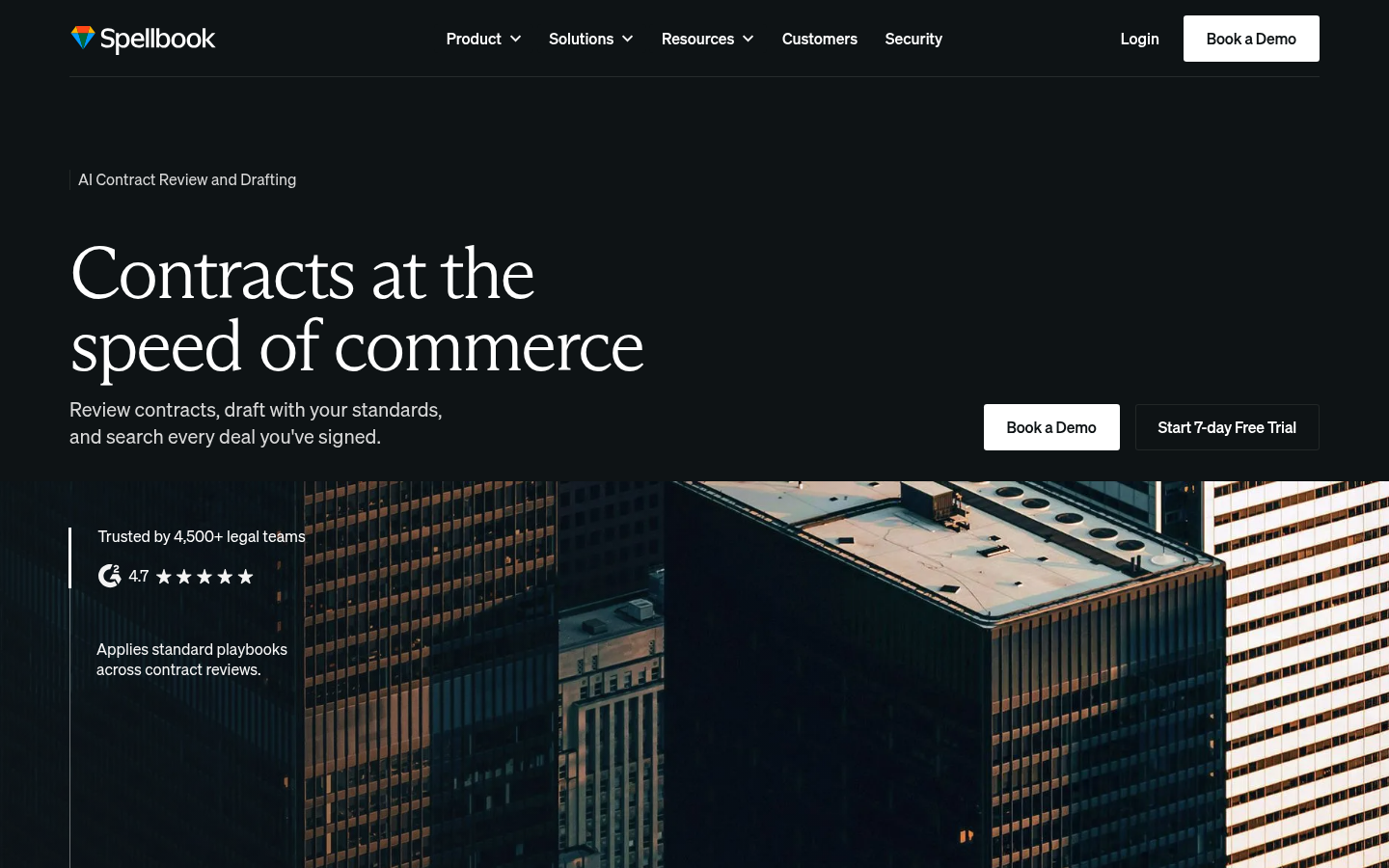
Spellbook
- Lives natively inside Microsoft Word, so lawyers keep their existing drafting workflow
- Clause-level market comparison flags language that deviates from typical deal terms
- Purpose-built clause libraries and risk flags aimed squarely at transactional practice
- Pricing isn't published, so smaller teams still need to request a quote to compare cost
- Narrower scope than an all-in-one platform, it does not cover case-law research
The most practical daily driver for contract-heavy teams who live in Word.
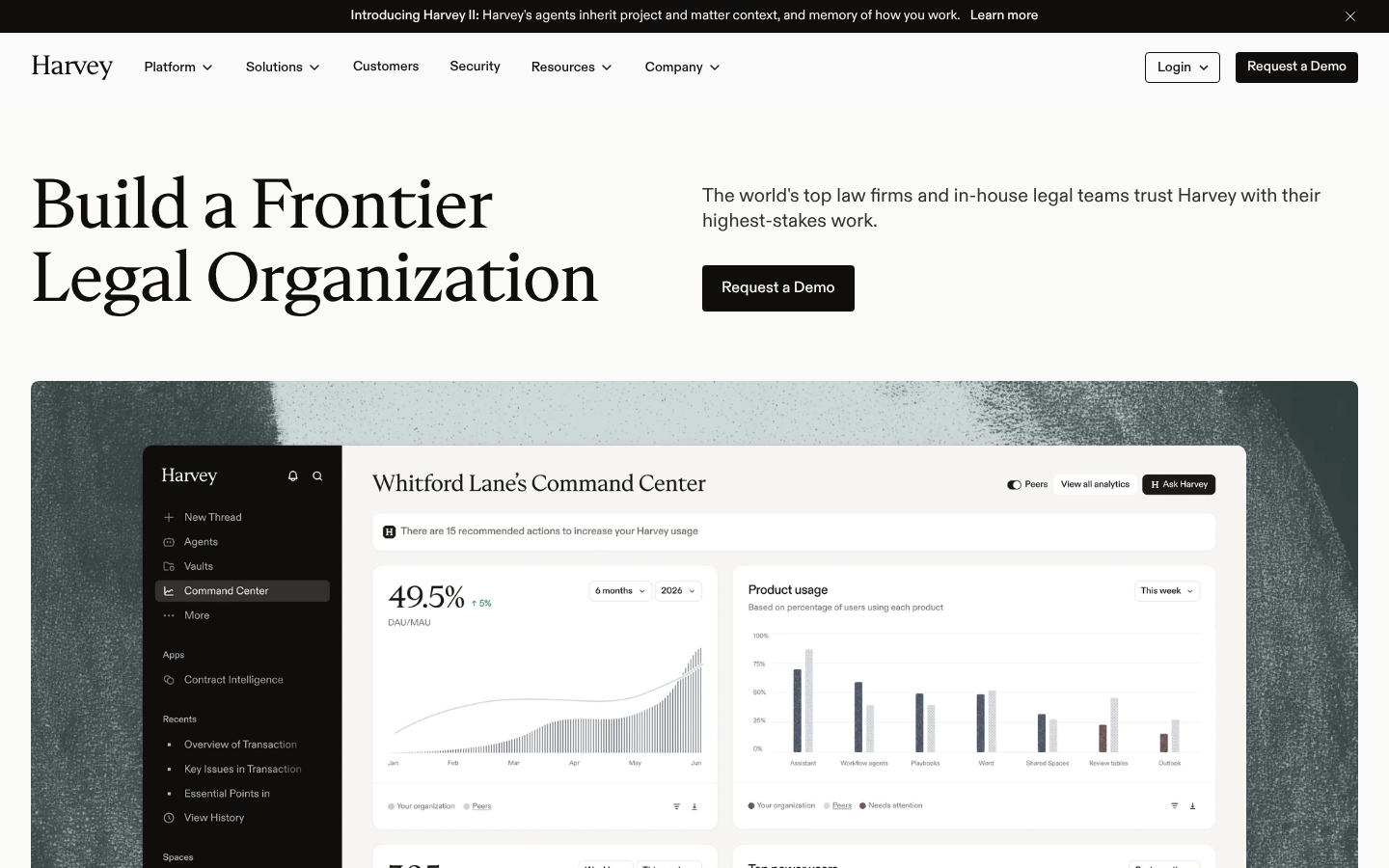
Harvey
- Broad platform covering research, drafting, contract analysis and workflow automation in one place
- Deep integrations with the document and matter management systems large firms already run
- Built specifically for team-based diligence across complex, multi-matter transactions
- No published pricing, so budgeting requires a full sales cycle before you know the cost
- Heavier onboarding than word-processor-native tools, overkill for a two-person legal team
The most complete platform, but sized and priced for firms with a real budget and IT team.
CoCounsel
- Outputs are grounded in Thomson Reuters proprietary legal content, not just a general model
- Validates citations and surfaces missing precedent automatically during document review
- Publishes tiered pricing, which makes budgeting easier than quote-only competitors
- Deepest value depends on a Westlaw or Practical Law subscription layered on top
- Higher tiers get expensive quickly once a team grows past a handful of seats
Strong choice for research-heavy work, best value when you already pay for Westlaw.

LegalOn
- 50+ attorney-built playbooks cover thousands of common contract issues out of the box
- Runs inside Microsoft Word with a reported setup time of about 15 minutes
- Automated redlines and risk flags cut first-pass review time on familiar contract types
- Playbook-driven approach is less flexible on highly bespoke or unusual agreements
- Built mainly for in-house review, not for litigation or case-law research
A fast, dependable first pass for the NDAs and SLAs in-house teams see every week.
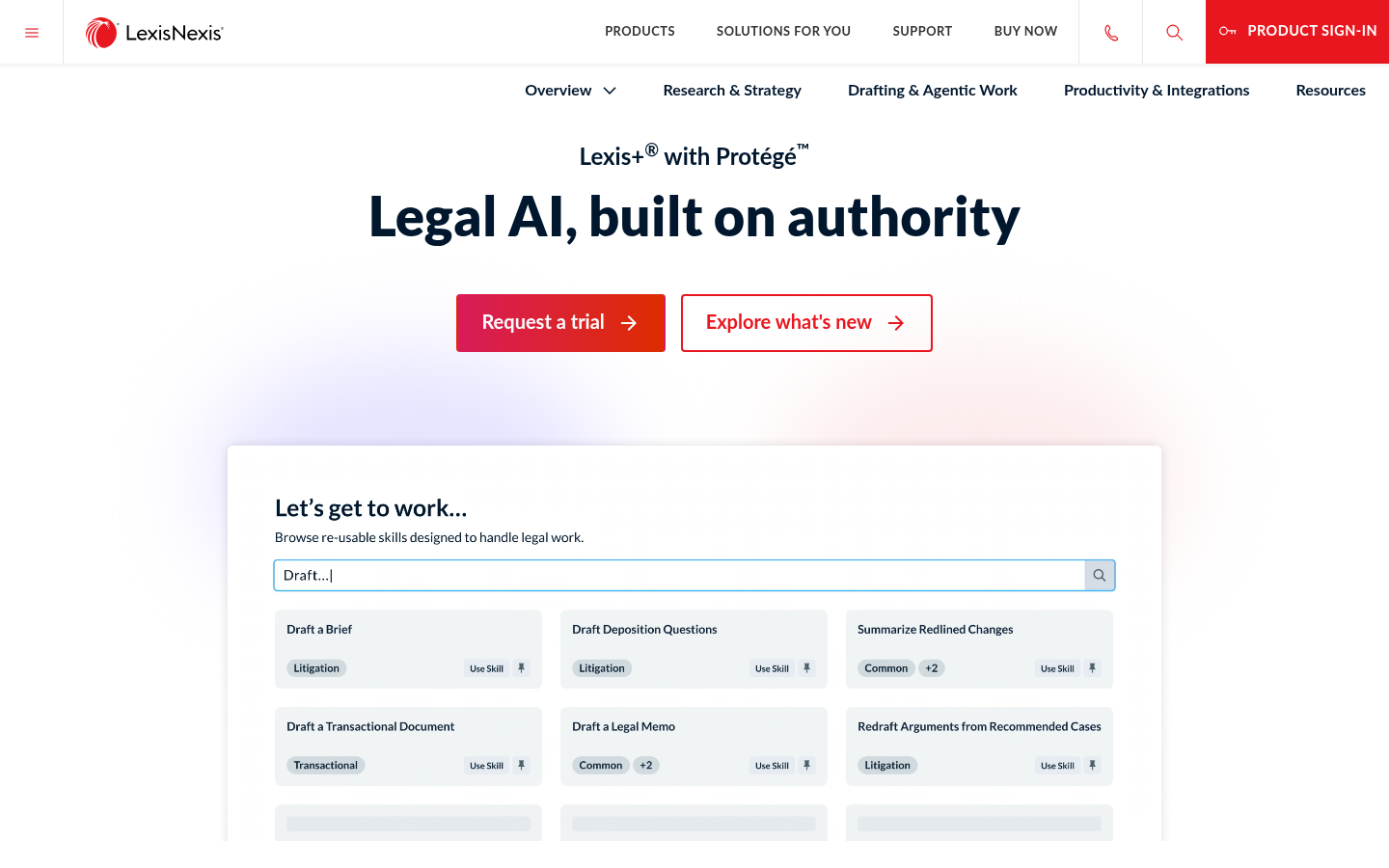
Lexis+ AI
- Brief Analysis reviews documents in minutes and flags missing precedent automatically
- Judicial Analytics surfaces a specific judge's ruling patterns before a filing
- AI drafting assistant sits alongside the research tools lawyers already use daily
- Full value assumes an existing LexisNexis subscription, it is not a lightweight add-on
- Contract drafting and review is a secondary feature, not the platform's core strength
A strong research companion for Lexis subscribers, less compelling as a standalone tool.
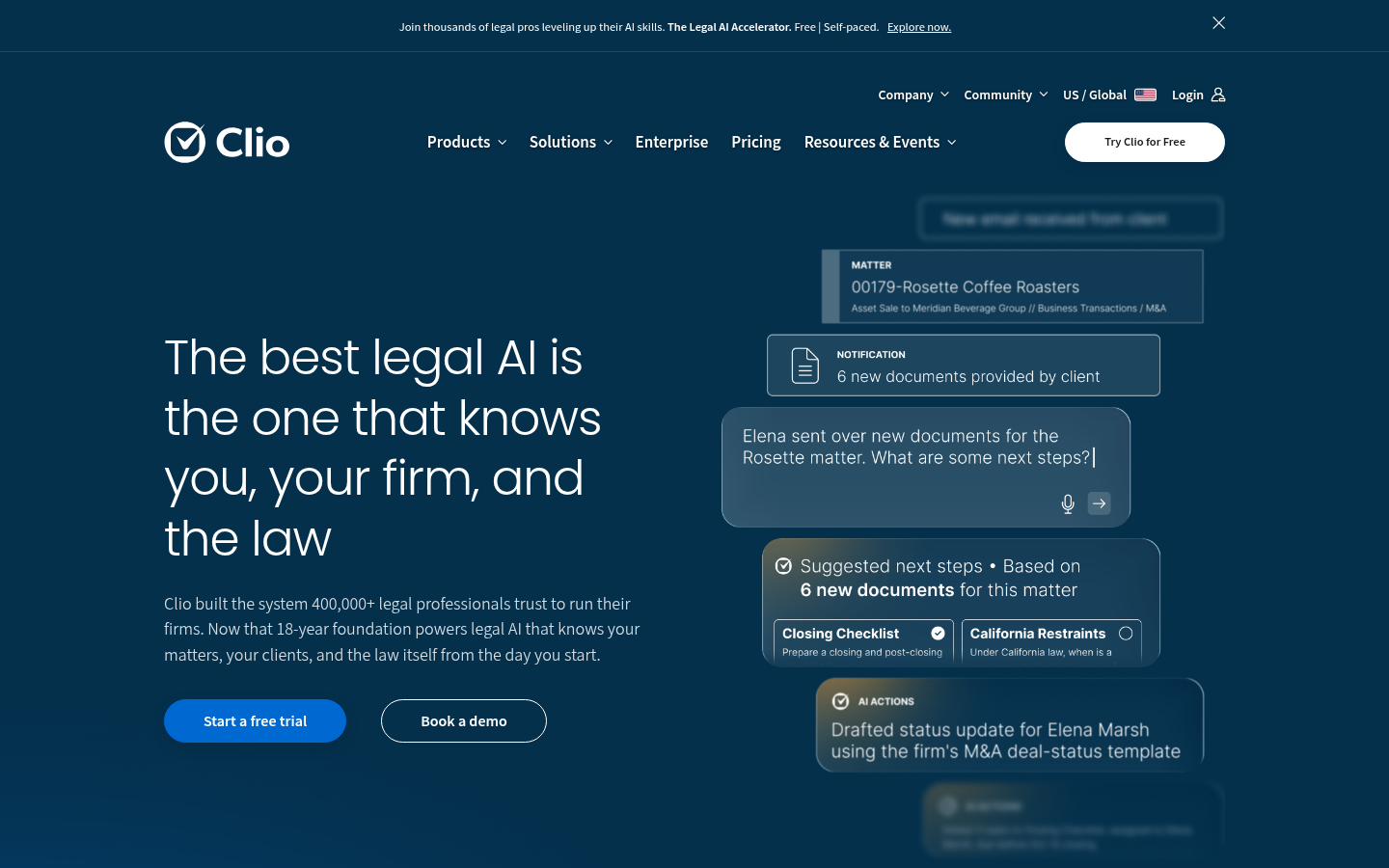
Clio
- AI features connect directly to the matter and client data the firm already has in Clio
- Lawyers can move between research, drafting, and case management without switching tools
- 18-year practice-management footprint means most firms already trust the underlying data
- AI capability is an extension of the practice-management suite, not a specialist tool
- Full value depends on also running firm practice management through Clio itself
Makes the most sense for firms that already run on Clio and want AI layered on top.
Verdict
There is no single best AI tool for lawyers in 2026, only the best tool for a specific job. Spellbook is the strongest starting point for most in-house teams and small firms because it works inside the Word document you already have open. Harvey earns its reputation at firms large enough to run a proper enterprise rollout. CoCounsel and Lexis+ AI make the most sense once you are already paying for Westlaw or LexisNexis. LegalOn is hard to beat for fast, repeatable review of contract types you see every week, and Clio fits teams who want AI tied to the practice-management system running the rest of the firm.
How we tested
We compared six AI platforms marketed to lawyers and in-house legal teams: Harvey, Spellbook, CoCounsel, Lexis+ AI, LegalOn, and Clio. For each, we reviewed the vendor's own pricing and product pages, cross-checked pricing claims against independent 2026 legal-tech comparison posts, and took a live screenshot of each product's homepage in September 2026 to confirm the platform still matches its public description. Harvey and CoCounsel require an enterprise sales process with no self-serve trial, so our assessment of those two rests on public documentation, published case studies, and third-party analyst write-ups rather than a hands-on account, a limitation we want to be upfront about. Spellbook, LegalOn, and Clio publish enough detail, or offer a trial, that we could confirm feature claims directly against their product pages. Criteria were chosen for what actually changes a buying decision inside a legal team: pricing model, primary use case, whether the tool lives inside Word, whether it is grounded in a proprietary case-law database, and the team size each is realistically built for.
Best AI tools for lawyers 2026 comes down to fit, not a single universal winner. Spellbook takes it for most lawyers and in-house teams: it drafts and reviews contracts natively inside Microsoft Word, without forcing anyone through an enterprise sales cycle to get started. Harvey is the more complete platform overall, covering legal research and workflow automation as well as drafting, but it is built and priced for large firms with dedicated IT support. CoCounsel, Lexis+ AI, LegalOn, and Clio each fit a narrower, specific need described below.
What "best" actually means for six different jobs
Ask a corporate counsel, a solo transactional lawyer, and an operations manager buying software for a 40-person firm what "best AI tool for lawyers" means, and you get three different answers. A corporate counsel wants fewer hours spent redlining the same clause types. A solo practitioner wants something priced for one person, not a procurement committee. An operations manager wants a tool that plugs into the case management system the firm already runs.
That is why this comparison covers six tools instead of crowning one universal winner. Some are built for contract drafting and review. Others are built for legal research grounded in case law. One is a practice-management platform with AI layered on top. Picking the wrong category for your actual workload is a more common mistake than picking the wrong vendor inside the right category.
How we tested and compared
We looked at six platforms actively marketed to lawyers and in-house legal teams in 2026: Harvey, Spellbook, CoCounsel, Lexis+ AI, LegalOn, and Clio. Pricing and feature claims come from each vendor's own product pages, checked against independent legal-tech comparison coverage published this year. Where a platform requires an enterprise sales process before you can see it in action, we say so rather than pretending we ran a live trial. The full methodology, including which sources we cross-checked, sits at the end of this page.
Contract review and drafting inside Word
Spellbook and LegalOn solve the same basic problem from slightly different angles: a lawyer or in-house counsel needs to review or draft a contract without leaving the word processor they already work in. Spellbook leans into drafting, with clause libraries and market-comparison flags that catch language drifting from typical deal terms. LegalOn leans into first-pass review, with attorney-built playbooks tuned to specific contract types like NDAs and SLAs.
Neither replaces judgment on a genuinely unusual clause. What they do well is compress the boring 80% of contract review, the standard indemnification language, the auto-renewal clause, the limitation of liability boilerplate, into minutes instead of an evening. For the volume of routine contracts most in-house teams and small firms actually see, that is where the real time comes back.
Legal research grounded in case law
CoCounsel and Lexis+ AI target a different job entirely: finding and validating the case law behind an argument, not drafting the contract itself. Both are grounded in a specific publisher's proprietary content, Westlaw and Practical Law for CoCounsel, LexisNexis for Lexis+ AI, which matters because it is the difference between a model guessing at a citation and one checking it against a real database.
The catch is that neither tool is cheap or useful in isolation. Their value depends on a firm already paying for the underlying research subscription. If your team is not on Westlaw or LexisNexis today, evaluate the base research platform first. The AI layer is an add-on, not a replacement for one.
Practice management with AI attached
Clio takes a different approach again: instead of a standalone AI tool, it adds AI drafting and research to the practice-management platform many small and mid-sized firms already run for billing, matter tracking, and client communication. The advantage is that the AI has direct access to matter and client data without a separate integration step. The tradeoff is that Clio's AI features are only as useful as your commitment to running the rest of your practice through Clio itself. If you already use it for case management, the AI layer is close to free upside. If you do not, it is a reason to switch platforms, not just add a tool.
Where Harvey fits, and where it doesn't
Harvey is the platform most likely to come up when "AI for lawyers" gets discussed in the legal press, and for large firms with the budget and IT support to run a proper enterprise deployment, it earns that attention: research, drafting, contract analysis, and workflow automation live in one configurable system, with integrations into the document and matter management tools big firms already run.
For a five-lawyer transactional practice or a two-person in-house team, that breadth is mostly unusable. There is no published pricing and no self-serve signup, so the first real cost is the sales process itself. Harvey is worth evaluating once your legal function is large enough to run a formal vendor selection, not before.
Beyond review: contract lifecycle management
None of the six tools above manage a contract after everyone signs it: routing approvals, tracking renewal dates, or keeping a searchable repository of every agreement the company has ever executed. That is a different category, contract lifecycle management, and it is worth knowing the name even if it sits outside this comparison's scope.
Ironclad is the tool named most often in that category among the vendors Legalysis tracks. If your problem is finding a contract from eighteen months ago, not reviewing one you just received, that is the tool to look at instead.
Choosing between them by team size and budget
If you are choosing today: pick Spellbook or LegalOn if the job is reviewing and drafting contracts inside Word, pick CoCounsel or Lexis+ AI if the job is case-law research and you already pay for the underlying subscription, pick Clio if you want AI tied to the practice-management system running the rest of your firm, and pick Harvey only once your legal function is large enough to run a formal enterprise vendor selection. Before you sign anything, ask each vendor for a live demo on one of your own contracts, not a canned one.