AI for Paralegals: What Works and What Stays With You
Summary
Paralegals are using AI for contract first-pass review, clause extraction, and obligation tracking. The tools work reliably on well-structured tasks but are less consistent on multi-jurisdiction employment agreements and term sheets. Verify any tool's data processing terms before processing client documents. A clear workflow, where AI runs the first pass and the paralegal validates each flagged item, is what turns output into a reliable work product.

Paralegals today run AI through NDAs before handing them to a supervising attorney, set it to flag renewal clauses across stacks of vendor agreements, and use it to extract obligation timelines from service contracts in a fraction of the time that manual review required. The tools are not speculative. Several are already part of the standard workflow at in-house legal teams across the EU and UK. The question is not whether to use AI for paralegals, but which tasks it handles reliably and where it still needs a trained pair of eyes.
What AI reliably handles in a paralegal's day
The strongest use cases are well-defined extraction tasks. Feed an NDA to a capable AI contract tool and it will locate the confidentiality term, identify the governing law clause, flag carve-outs from the definition of confidential information, and note whether the mutual language is actually bilateral or quietly one-sided. That last point is one many human readers skip on the first pass.
The same applies to SLAs. AI can pull the uptime commitment, identify the measurement window (is it a calendar month or a rolling 30 days?), find the credits clause, and check whether a liability cap on service credits makes the remedies largely symbolic. In practice, this is the kind of clause-by-clause extraction that paralegals previously spent four to six hours on per complex agreement. With a trained tool, the first-pass draft is ready in under twenty minutes.
Obligation tracking is another strong fit. When a vendor agreement contains a notice period for termination, a data processing annex with deletion timelines, or a reporting obligation tied to a specific calendar date, AI can extract those entries and populate a tracker automatically. The alternative is reading every page twice and hoping nothing slips through.
The three document types where AI consistently misses what matters
Not every document type yields the same results. Three categories warrant particular caution.
Term sheets and letters of intent. These documents tend to be short, but their language is deliberately ambiguous on valuation, dilution protection, and pre-emption rights. AI will flag a missing representations clause but is unlikely to catch that the valuation is based on a pre-money figure that diverges from what was discussed verbally, or that a standard liquidation preference is actually 2x non-participating. This kind of reading requires market context, not just clause identification.
Employment contracts in multi-jurisdiction settings. An employment agreement covering someone who works partly from Germany and partly from Austria involves overlapping mandatory law protections that shift depending on where the employee is habitually based. AI tools trained primarily on Anglo-American contract corpora frequently default to common law analysis and miss civil law protections that cannot be waived by contract. This is not a minor gap.
Dispute resolution clauses with institutional references. Arbitration clauses that reference ICC, VIAC, or DIS rules require understanding how those institutions' procedures have evolved in recent years. An AI that flags an inconsistency without knowing that a named institution updated its expedited procedure in 2024 may produce a technically correct but contextually misleading observation.
In practice, this means that AI output on these document types requires careful verification, not just a quick sign-off. The first-pass review is useful; treating it as the final review is where things go wrong.
Why data privacy is the question most tool guides skip
Before you run a client contract through any AI tool, the relevant question is not whether the output is accurate. It is whether the terms of service of the tool you are using allow the provider to use that document to train future models.
This matters more in the EU than in most other jurisdictions. Under the GDPR, personal data embedded in contracts, including names, contact details, and salary figures in employment agreements, cannot be processed by a third-party tool without a valid lawful basis and, in practice, a data processing agreement with appropriate safeguards. Several popular AI tools that perform well on contract analysis benchmarks have terms that are either silent on training data use or explicitly permit it unless you are on an enterprise plan.
The tools that handle this cleanly in a European legal context tend to be the ones with explicit enterprise data agreements and a clear statement that documents are not retained after the session. General-purpose AI assistants, including some very capable ones, require more scrutiny before you process anything that contains identifiable personal data.
This is not a theoretical risk. It is what compliance officers at law firms and in-house legal departments are examining right now. Worth confirming with your supervising attorney before expanding AI use to new document types: the liability for a data breach sits with the law firm or in-house legal department, not the tool provider.

How to structure a first-pass review workflow that actually holds up
The most productive paralegal workflows using AI share a common structure. It is worth naming explicitly because it differs from what most tool guides describe.
The AI runs the first pass and produces a clause extraction, a flagged issues list, and a summary of the key commercial terms. The paralegal reviews the output, validates each flagged item against the original text, adds context the AI cannot have (the counterparty's negotiating history, any verbal agreements referenced during drafting), and prepares a marked-up version with their own observations. The supervising attorney then reviews the exceptions and the context, not the raw document.
This structure works because it places AI where it is strongest (systematic extraction across many pages) and keeps humans where they are irreplaceable (judgment, context, accountability). It also creates a clear audit trail, which matters if a dispute arises later.
Three elements make this workflow durable:
The paralegal always reads the flagged sections in the original document, not just in the AI summary. Summaries compress; the original is the record.
Any clause where the AI output is ambiguous or inconsistent with what was discussed verbally gets flagged for attorney review, not resolved independently.
The tool being used has a clear data processing agreement in place. If it does not, the workflow does not apply to documents containing personal data.
Tools worth considering for this kind of work
The product landscape for legal AI has consolidated. A few tools have earned consistent trust from in-house teams in the EU market, alongside general-purpose assistants that work well when used with appropriate data controls.
ChatGPT Work (the business tier with enterprise data agreements) is used by many paralegal teams for document summarization, first-draft clause comparisons, and identifying missing standard provisions. Its strength is breadth: it handles a wide range of document types without needing pre-configured playbooks. Its limitation is that it requires well-structured prompts and does not natively produce a redline or tracked-changes version.
Notion AI works well for organizing extracted information. Once a paralegal has run a first-pass review, Notion becomes a useful repository for obligation trackers, deadline logs, and contract summaries. The AI layer helps structure and retrieve that information more quickly than a standard spreadsheet allows.
Otter.ai is worth having for client calls and internal review meetings. Paralegals who participate in contract negotiation calls use it to produce a reliable transcript, which then serves as a reference if a question arises later about what was discussed or agreed verbally. It is not a purpose-built legal AI tool, but it fills a practical gap that purpose-built tools do not cover.
Fireflies AI covers similar ground for firms that prefer its interface or already use it in their practice management stack. The transcription quality is comparable; the choice often comes down to which integrations the firm already has in place.
What to verify before passing anything to a supervising attorney
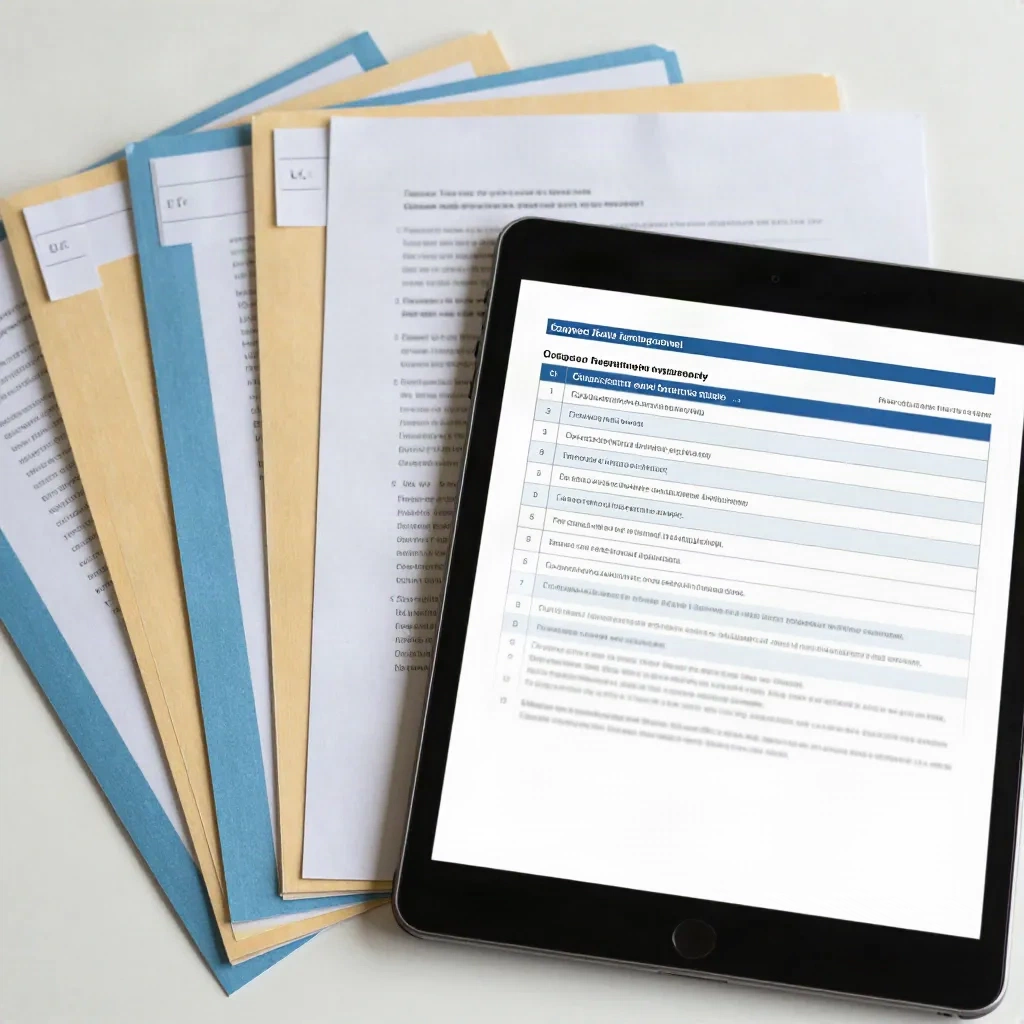
A first-pass review produced with AI support is a useful document. It is not a finished work product. Before handing anything upward, the following checks should be standard.
Confirm that the governing law and jurisdiction clauses have been read against the correct legal framework, not just flagged as present. AI will note that a governing law clause references Austrian law. It will not verify that the indemnification structure is consistent with Austrian mandatory law limitations.
Verify that all defined terms are actually defined within the document. AI tools occasionally miss cases where a term is used in the operative provisions but defined only in an attached schedule, or where the definition differs from what the operative clause implies.
Check that any cross-references point to the correct clause number. Numbering errors that survive document editing are a common source of disputes. AI is inconsistent at catching them.
Note any discrepancy between the AI summary of a clause and the actual text. If there is one, the text governs. The summary is a navigation aid, not a substitute.
This is not a list of AI failures. It is the checklist that defines a paralegal's value in an AI-assisted workflow: the trained attention that turns a fast first pass into a reliable work product.
Three things worth doing before expanding AI use further
If you are integrating AI into your contract review process for the first time, start narrow. Pick one document type you review regularly, run the AI tool against three or four recent examples, and compare its output with what you flagged manually. The gap between the two tells you more than any feature list.
Confirm the data processing terms of any tool you plan to use with client documents before you run a single agreement through it. This takes twenty minutes and avoids a conversation you do not want to have later.
Finally, set a review standard for how you validate AI output before escalating. Not a general intention to check things, but a written checklist specific to the document types you handle. The discipline of writing it down is what makes it repeatable.