Generative AI for Lawyers: What It Does in Practice
Summary
Generative AI for lawyers is no longer a future promise. Tools like Harvey AI, Spellbook, and CoCounsel handle contract review, legal research, and drafting faster than any associate working alone. This guide covers the tasks where generative AI saves lawyers the most time, where it still needs careful oversight, and the confidentiality questions every firm must answer before adopting an AI-assisted workflow.

The adoption of generative AI for lawyers has moved from experiment to daily practice faster than most anticipated. Lawyers now spend between 40 and 60 percent of their working hours on document drafting and review -- and AI tools handle a meaningful share of that work. Not perfectly, and not without supervision, but fast enough and consistently enough that the 26 percent of legal organizations already using these tools are not reconsidering that decision.
This is not a theoretical forecast. It is what practitioners across corporate legal departments and law firms are reporting in 2026.
What Can Generative AI Actually Do for Lawyers?
Generative AI, in the legal context, refers to large language models trained on extensive text data -- legal codes, case law, contracts, regulatory filings -- that can read, summarize, draft, and flag issues in legal documents. The output is text, and it arrives in seconds rather than hours.
The tasks where legal professionals report using these tools most are document review, document summarization, legal research, brief and memo drafting, contract drafting, and correspondence. Each of these maps directly onto work that currently consumes significant associate and paralegal time.
The key point worth keeping in mind from the start: these tools augment. They do not replace the judgment required to decide what to do with what the AI finds. That distinction matters for how you build a workflow around them.
Contract Review: Where AI Saves the Most Time
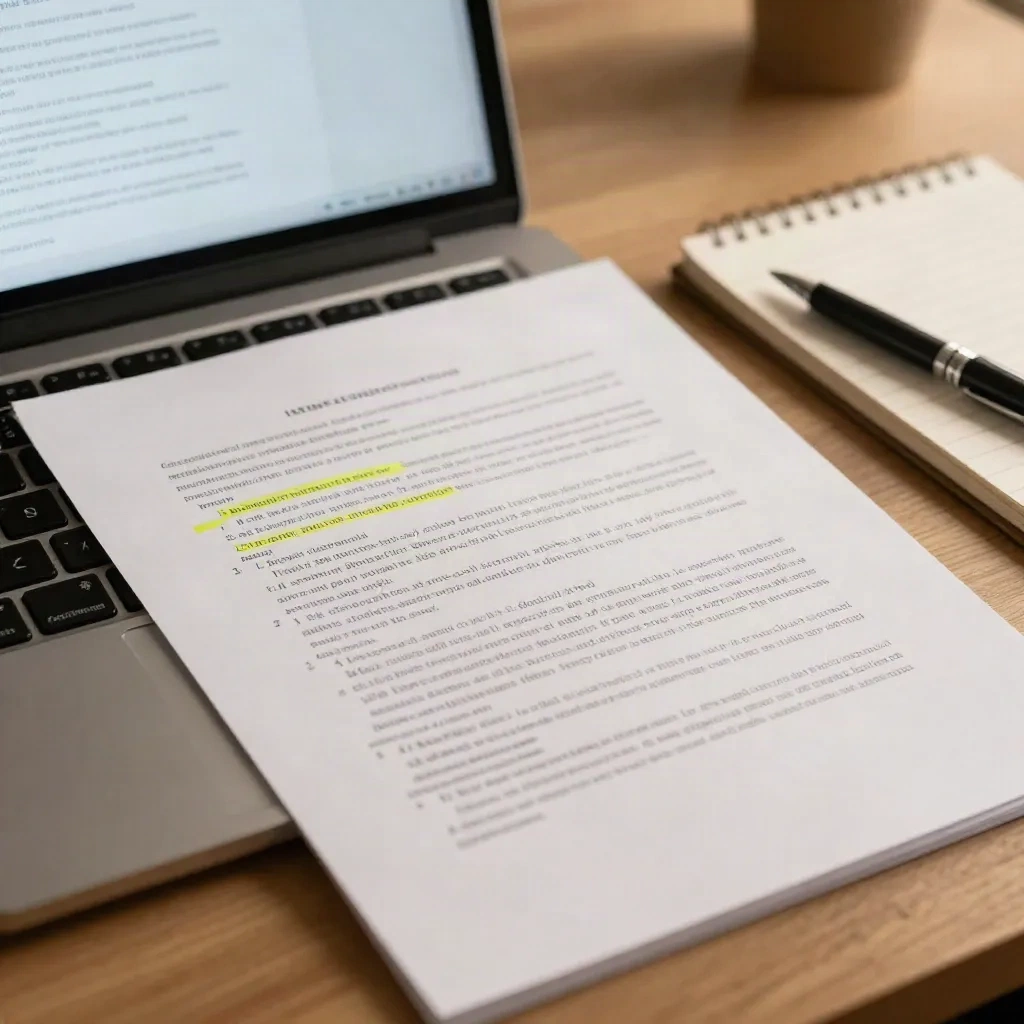
Contract review is where generative AI has the clearest and most immediate value for legal practice. The pattern is consistent: a lawyer uploads a contract, the AI flags clauses that deviate from market standard or from the firm's preferred positions, and the lawyer reviews the flagged items rather than reading the full document from scratch.
In practice, this means reviewing a 40-page SaaS agreement takes 20 minutes instead of two hours. The AI identifies the limitation of liability cap, notes whether it covers direct damages only, and flags whether indemnification runs one-way or mutual. That is work a junior associate would do correctly after several years of practice.
Tools built for this specific task include Spellbook (which integrates inside Microsoft Word), Legalysis, Ironclad AI, and Kira Systems. Each approaches clause extraction and risk scoring differently. Harvey AI and Thomson Reuters CoCounsel cover contract review alongside research and drafting within a single platform.
Three types of clauses that benefit most from AI-assisted review:
Auto-renewal provisions -- AI catches the notice-period language that gets buried in standard-form boilerplate and is easy to miss on a first read
Jurisdiction and governing law clauses -- frequently set to a jurisdiction that creates asymmetric risk for one party without being immediately obvious
Limitation of liability exclusions -- the carve-outs for gross negligence and IP infringement that change the entire risk picture of an agreement
For each of these, the AI surfaces the language and flags it. Whether the risk is acceptable in context remains a question for the lawyer reviewing the document.
Legal Research with AI: Reliable Assistance, Known Limits
Legal research is where generative AI delivers significant speed gains but also where the risk of error is highest. The AI can synthesize a research question, identify relevant cases across a jurisdiction, and produce a structured draft memo in minutes. Associates at firms using Harvey report cutting initial research memo drafting time by 30 to 50 percent.
The limit worth knowing: large language models can generate plausible-sounding citations that do not exist. This is not a minor edge case -- it is a documented pattern that has resulted in sanctions for lawyers who relied on AI-generated citations without verification. Any AI-generated legal research output requires checking against primary sources before it gets used in any submission or advice.
In practice, this means AI is most valuable for the first pass: understanding the relevant legal framework, identifying the cases most frequently cited in a jurisdiction, and producing a draft memo structure. A qualified lawyer then verifies the citations and applies the judgment layer that determines what the research actually means for the client's situation.
Tools with citation verification built in -- like Thomson Reuters CoCounsel, which draws on Westlaw's verified content -- reduce this risk substantially compared to using general-purpose models with no connection to a primary legal database.
Drafting Documents and Correspondence Faster
Drafting is where general-purpose AI tools -- Claude, ChatGPT, Gemini -- earn their place alongside legal-specific platforms. For routine correspondence, engagement letters, non-disclosure agreements, and first-draft sections of longer agreements, the speed gains are real and the barrier to adoption is low.
The approach that works consistently in practice: provide the AI with specific context (jurisdiction, party positions, particular requirements), and ask it to draft one section at a time rather than an entire document. Review that section, correct what needs correcting, and proceed. This keeps the lawyer in control of the document's structure while reducing the time spent on the blank-page problem that slows down routine drafting.
For anything involving significant financial exposure, unusual jurisdiction-specific requirements, or contentious commercial terms, treat the AI output as a working draft that requires careful review rather than a finished product. The AI draft identifies structure and standard positions; the lawyer identifies what needs to deviate from those standards for this specific matter.
Due Diligence at Scale: Handling Volume Without Sacrificing Accuracy
Due diligence in M&A transactions involves reviewing hundreds or thousands of documents -- asset schedules, employment agreements, IP assignments, regulatory filings, real property records -- under time pressure that rarely allows for exhaustive manual review. This is where generative AI moves from useful to essential.
AI tools designed for due diligence can process a virtual data room, categorize documents by type, flag missing documents against a standard checklist, and produce a preliminary issues list organized by risk category. Kira Systems built its reputation on exactly this task, and Harvey AI has added comparable scope at scale for larger transaction teams.
The 2026 ACC Chief Legal Officers Survey found that 52 percent of US in-house counsel began using generative AI tools in 2025 -- more than double the adoption rate of the previous year. The concentration is highest in legal departments handling transaction volume, where the time savings from AI-assisted document triage compound across each deal.
What AI does not do is assess the business significance of what it finds. It can flag that a material adverse change clause contains a carve-out for market-wide events. Whether that carve-out is acceptable in the context of the specific transaction structure is a judgment call that requires a lawyer with deal experience.
The Confidentiality Question Every Firm Must Answer First
Before adopting any generative AI tool for legal work, one question comes before all others: where does the data go?
Most large language model providers process inputs on their servers. If a lawyer uploads a client contract to a general-purpose AI tool on standard consumer terms, that contract may be used to train future model versions, depending on the provider's data retention policy. For most law firms and legal departments, this creates an unacceptable professional responsibility problem under attorney-client privilege rules and applicable bar regulations.

Legal-specific platforms like Harvey AI, Legalysis, and CoCounsel operate on private infrastructure or dedicated instances with explicit data isolation commitments. This is not a feature distinction -- it is a baseline requirement for any tool that handles confidential client documents. Any tool that cannot provide a clear answer about where client data is processed and whether it is used for model training should not be part of a law firm's workflow.
In practice, the approach that works is tiered: legal-specific tools with signed data processing agreements for anything involving client documents, and general-purpose tools on enterprise terms only for non-client-specific work like template development or internal knowledge base drafting.
General-Purpose AI vs. Legal-Specific Tools: Which Fits Which Task
The most consistent mistake in generative AI adoption for lawyers is treating all AI tools as interchangeable for legal work. They are not, and the distinction matters both for output quality and for professional responsibility.
General-purpose tools (Claude, ChatGPT Enterprise, Gemini): useful for drafting templates, explaining legal concepts in plain language for client communications, generating outline structures, and summarizing publicly available material. The output requires expert review. These tools should not be used with confidential client documents unless enterprise terms with data isolation are in place.
Legal-specific tools (Harvey AI, Spellbook, CoCounsel, Legalysis, Ironclad AI, Kira Systems): purpose-built on legal training data, with jurisdiction awareness and clause-level precision that general models do not match on specialized tasks. Designed from the ground up for the confidentiality requirements of legal practice. More expensive per seat. Worth the cost for repetitive, high-volume work like contract review and due diligence triage.
The practical configuration most firms are landing on in 2026: a legal-specific platform for all client-facing document work, and Claude or ChatGPT Enterprise for internal drafting, knowledge management, and research orientation. These are not competing choices -- they cover different parts of the workflow.
Three Practical Steps to Take Before Committing to a Tool
If you are a lawyer or legal operations team evaluating where to begin:
First, identify the task in your practice that involves the most repetitive document reading -- contracts in a standard format, research memos on recurring legal questions, due diligence checklists. Test one legal-specific AI tool against that specific task for two weeks. Measure the actual time difference before making any broader commitment.
Second, before using any AI tool with a client document, read the data processing terms carefully. If the tool does not offer a data processing agreement or a private deployment option, do not use it for confidential matters. This is not optional.
Third, start with AI as a first-pass reviewer or drafter, not as a final authority. The model surfaces and flags; the lawyer decides. That division of labour is where the productivity gains are real and the error risk stays manageable.
The 2026 Thomson Reuters report on generative AI in legal practice notes that 95 percent of legal professionals believe generative AI will be central to their workflows within five years. The question is not whether to adopt it, but how to do so without creating new risks in the process of reducing old ones.