What Is GEO? Generative Engine Optimization for Law Firms
Summary
GEO (Generative Engine Optimization) is the practice of structuring legal content so that AI platforms such as ChatGPT and Perplexity cite your firm when generating answers. It works alongside traditional SEO, not against it. The content signals that matter -- answer-first paragraphs, FAQ schema, jurisdiction specificity, attorney attribution -- overlap significantly with good SEO practice. Firms that already publish specific, credentialed legal content are well positioned to apply GEO without rebuilding their content library.

What is GEO? Generative Engine Optimization (GEO) is the practice of formatting legal content so that AI platforms -- ChatGPT, Perplexity, Google's AI Overviews -- select your firm as a source when generating answers for potential clients. It is not a replacement for traditional SEO. It is a second layer of the same visibility problem. Law firms that rank first in Google search results can be entirely invisible in an AI-generated answer about the same topic. That gap is where GEO sits.
GEO in brief: the core idea
A potential client opens ChatGPT and types "what should I check before signing a commercial lease in Germany?" The system does not return a list of links. It generates a coherent paragraph, draws on several sources it has indexed, and -- if it identifies a piece of content as authoritative on this specific question -- may cite it directly.
GEO is the discipline of ensuring your content is structured so that selection happens. The term was introduced by Princeton researchers in 2023 and has moved quickly from academic framing to practitioner reality. By mid-2026, AI-generated answer panels appear on a significant share of legal searches across all major platforms.
In practice, this means that a firm's content is being evaluated by two distinct systems: a traditional search index that ranks pages, and AI synthesis models that extract and paraphrase them. Optimising for one without the other leaves visibility on the table.
Why your Google ranking no longer tells the full story
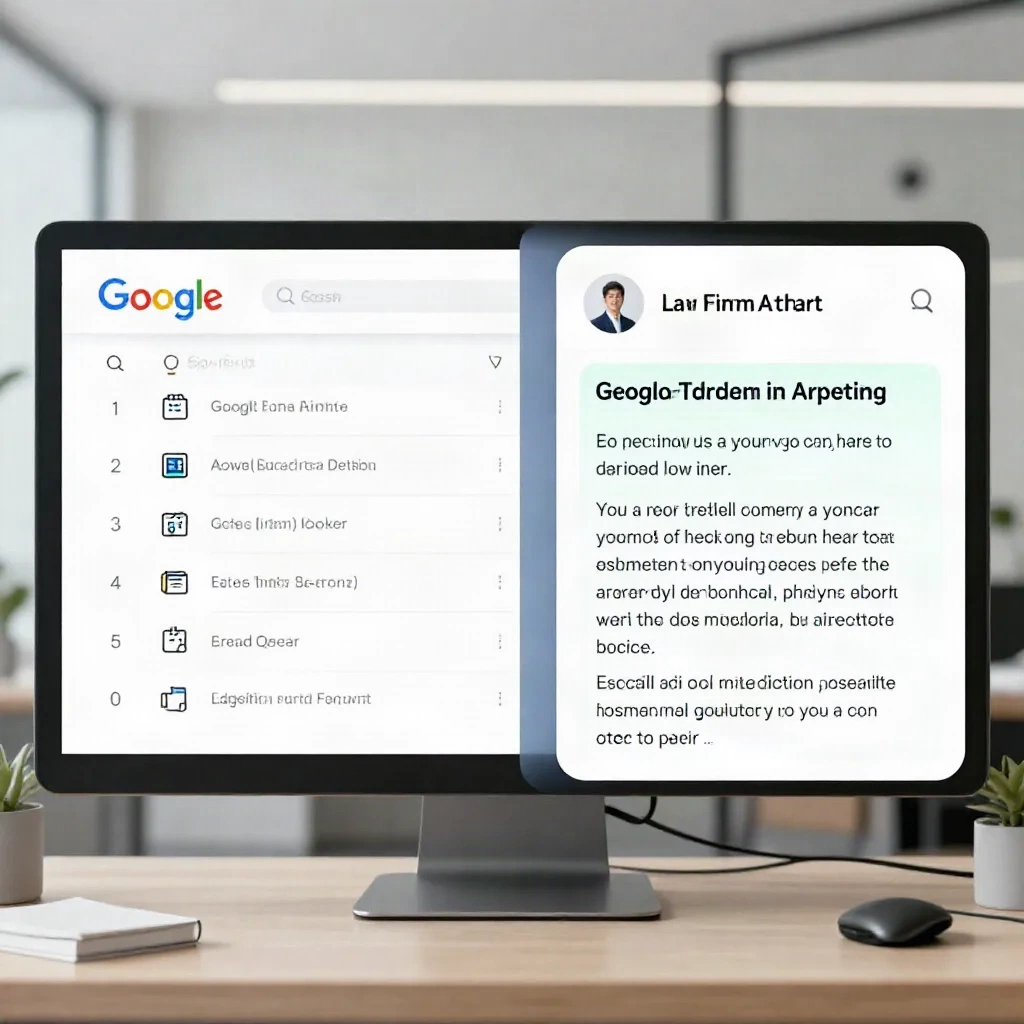
A firm that ranks in the top three organic results for "commercial tenant rights Switzerland" is not automatically cited when ChatGPT or Perplexity answer questions on the same topic. The selection criteria are different.
AI platforms weight factors that search engines treat as secondary: the directness of the answer, the specificity of legal jurisdictions cited, the presence of structured data markup, and whether the content reads as the statement of a credentialed professional rather than a general overview.
The practical consequence: a firm could maintain strong traditional SEO health while being largely absent from AI-generated responses and never notice unless someone checks manually. That check takes two minutes: open ChatGPT, type your three most common client questions, and read the answers. If your content is not cited or paraphrased, you are not visible in that channel.
What changes between SEO and GEO, specifically
The difference is not as wide as some headlines suggest. Strong SEO fundamentals -- fast-loading pages, clear internal structure, consistent entity signals, quality backlinks -- carry over directly into GEO. What changes is content formatting and depth.
Traditional SEO aims for articles that are clicked. GEO requires articles that are paraphrased -- and cited. That shift has two concrete implications. First, each section should open with a direct, extractable answer before the supporting explanation. Second, structured data markup (FAQPage, LegalService, Attorney schema) gives AI crawlers a legible signal about what type of content they are reading and who produced it.
A useful framing: SEO optimises for the reader who lands on the page. GEO optimises for the system that decides whether to surface the content before the reader ever arrives.
The signals AI engines actually look for
Based on patterns observed since AI Overviews became widespread, four signals correlate with citation frequency.
Directness in the first sentence of each section. AI extraction models prefer the point before the context. "Under Swiss contract law, auto-renewal clauses are valid provided the counterparty has been given reasonable notice" performs better than "There are several considerations when reviewing auto-renewal clauses under Swiss law."
Jurisdiction specificity. Vague references to "standard contract law" are not extractable in a useful way. References to specific legislative provisions -- the Swiss Code of Obligations, the German BGB, EU Regulation 2016/679 -- allow AI platforms to match content to jurisdiction-specific queries. This is something legal content is structurally well placed to provide.
Structured data. FAQPage schema, LegalService schema, and Attorney schema give AI crawlers a structured signal that is independent of prose quality. These are not difficult to implement and their absence is a significant disadvantage.
Attorney credential signals. Content attributed to a named professional with a stated bar admission jurisdiction and year consistently outperforms anonymous content in AI citations. A named corporate counsel admitted to the Zurich bar, specialising in cross-border SaaS agreements, is an extractable entity. An anonymous editorial team is not. These credential signals do not require fabricating claims -- they require presenting accurate professional information in a structured, readable format that AI systems can process.
Three content changes that cover most of the ground
Firms do not need to rebuild their content library. Three structural changes account for most of the improvement.
Answer-first paragraphs. Every H2 section should open with one or two sentences that answer the question implied by the heading. The supporting explanation follows. This matches how AI systems extract content for synthesis and has the secondary effect of making articles more readable for humans as well.
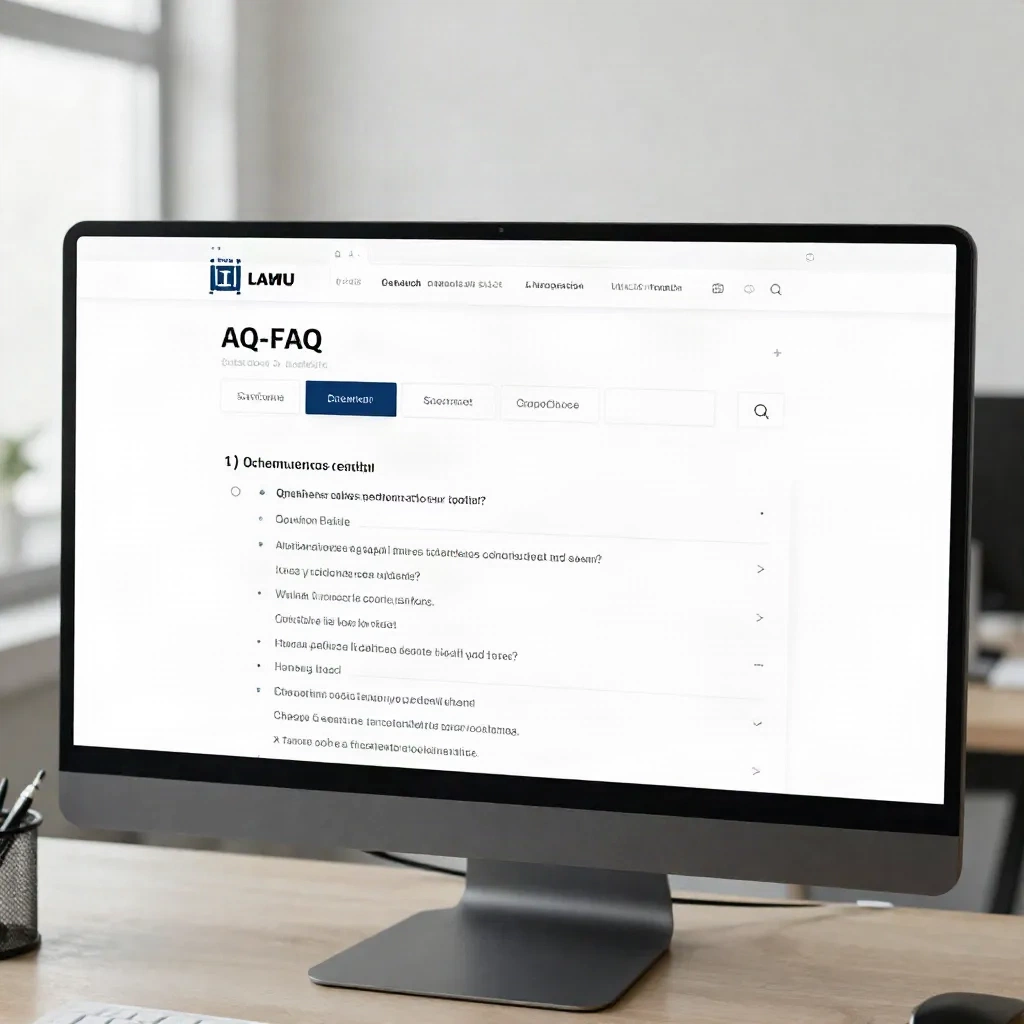
Dedicated FAQ sections. A section at the end of each article with six to ten questions, each answered in 40 to 80 words, provides clean extraction targets. Each question should be phrased the way a client would ask it, not the way a lawyer would frame it. "Can my landlord increase rent during a fixed-term lease?" is extractable. "Considerations regarding rental price variation under fixed-duration contractual arrangements" is not.
Consistent attorney attribution. Each article should be attributed to a named legal professional with their jurisdiction and specialisation stated in the byline or author block. That attribution becomes an entity signal that AI systems can verify against other sources.
A practical starting exercise: paste your three best-performing articles into ChatGPT with the prompt "who should I consult to understand this topic?" If your firm does not appear in the answer, the content is not structured for citation.
How to measure whether GEO is working
Measurement is where most firms are starting from scratch. Traditional SEO tools track Google rankings, not AI citations. Three approaches work in practice.
Manual prompt monitoring. Identify eight to twelve questions your ideal clients ask. Run them monthly in ChatGPT, Perplexity, and Google AI Overviews. Record whether your firm or your content appears. This takes time but produces reliable, unfiltered data.
GA4 traffic segmentation. Perplexity, in particular, sends referral traffic when it cites a source. Build a channel group in GA4 that captures sessions from known AI sources: perplexity.ai, chatgpt.com, and bing.com/chat. Conversion rates from these sessions are worth tracking separately from organic search -- the intent quality is typically higher.
Share of voice across key queries. On your highest-priority practice area queries, count how often your firm appears versus named competitors. The gap between your Google ranking and your AI citation frequency tells you where to focus content work.
None of these measurement approaches requires dedicated software. A spreadsheet tracking ten queries, run monthly across three AI platforms, is sufficient to identify trends and calibrate content priorities. Measurement sophistication can increase as GEO becomes a consistent part of the editorial workflow.

Two things GEO does not replace
First, GEO does not replace legal advice. AI-generated answers on legal topics are frequently incomplete, jurisdiction-blind, or simply wrong on points of law that require professional judgment. GEO is a marketing and content discipline. It improves the chances that your firm is visible when a potential client asks an AI platform a legal question. It does not affect the accuracy of what that platform says.
That distinction matters from a professional responsibility standpoint as well. Clients who receive AI-generated legal guidance and act on it without consulting counsel remain at risk. GEO visibility creates an opportunity for that consultation to happen. It is a first step in the client journey, not a substitute for the subsequent steps.
Second, GEO does not replace traditional SEO. Traditional search still handles the significant majority of legal service discovery globally. The correct allocation is additive: the same content improved for GEO -- more specific, more structured, more clearly attributed -- typically performs better in organic search as well. Jurisdiction-specific, credentialed, answer-first content is useful to both systems.
The firms that benefit most from GEO investment are those that already publish genuinely useful, specific legal content. If the underlying content is thin or jurisdiction-agnostic, GEO formatting will not compensate for it. AI systems are selecting content that is genuinely informative, not content that has been optimised in structure alone. That is consistent with what good legal writing has always required: precision on the facts, specificity on the jurisdiction, and clarity on the practical implications for the reader.
Where to start this week
Three actions that make sense to run first: audit your five most-visited practice area pages for answer-first formatting and add FAQ schema; verify that every author attribution includes a named professional with jurisdiction stated; and run your ten most common client questions in ChatGPT and Perplexity to establish a baseline before implementing anything else. That is not a theoretical exercise -- it is the fastest way to see where the gap between your search visibility and your AI visibility actually sits.