Genspark Alternatives: 3 AI Workspace Tools Compared
Summary
Genspark alternatives fall into three camps: broader creative workspaces, fully autonomous task agents, and fast document-and-deck generators. This comparison looks at Skywork, Manus, and Gamma against Genspark on price, autonomy level, and output range. Skywork comes out as the strongest all-round pick for teams that produce a lot of visual and written material, while Manus suits narrow, well-scoped tasks and Gamma wins for quick decks and one-pagers.
Genspark alternatives are worth checking whenever the daily credit limit runs out mid-task, the pricing tiers stay opaque until you sign up, or you simply need a second opinion before committing to a monthly plan. Skywork, Manus, and Gamma cover three different angles on the same problem: one AI login instead of five separate tools. Skywork comes out as the strongest all-round pick below, with Manus better for narrow autonomous tasks and Gamma faster for a single deck.
Why look beyond Genspark in the first place
Genspark's pitch is a single workspace for slides, documents, images, video, code, and even phone calls, run through a no-code Super Agent. That breadth is genuinely useful for teams who would otherwise juggle five subscriptions. In practice, two limits show up quickly: the exact pricing grid and credit costs stay behind an account signup, and a tool built to do everything rarely matches a specialist at any single task, such as slide design or image generation.
None of that makes Genspark a bad tool. It makes it worth comparing against a short list of alternatives before you settle on a paid tier, especially if your team leans heavily on one output type, like visuals or research decks, rather than the full spread.
Skywork: the closest match on breadth, stronger on visuals
Skywork organizes its workspace around seven specialised agents: images, slides, documents, spreadsheets, websites, videos, and podcasts. Its image agent runs on Nano Banana Pro, which noticeably outperforms most standalone image generators on detail and prompt accuracy. Two features stand out from the rest of the field: Layer Splitting, which gives editable layers on AI-generated images the way Photoshop would, and Inspiration Capture, a Discord and WhatsApp bot that builds a shared design library automatically from screenshots a team sends it.
The Deep Research mode on the Slides agent cites real sources from Google Scholar and Wikipedia rather than presenting plausible-looking numbers with no origin. That single detail matters more than it sounds for anyone producing client-facing or internal decision material, since a slide with an invented statistic is a real liability.
Where Skywork loses ground: website generation is still MVP-quality and won't replace a dedicated builder like Webflow or Framer, and as a generalist tool it will not out-perform a single-purpose app built only for one job. For teams currently paying for Canva, Gamma, and a separate design tool at once, consolidating into Skywork's roughly $12 to $16 a month Pro tier is the more defensible move, and the free tier is enough to test the workflow before switching.
Manus: autonomous, but read the billing complaints first
Manus popularized the "hand off one prompt and walk away" style of agent. Once a task starts, it browses, writes and runs code, and assembles a finished deliverable, whether that's a website, a slide deck, or a research report, with far less back-and-forth than a chat-style tool. Its Wide Research mode can fan a single task across many parallel sub-agents, which is genuinely useful for large research jobs that would otherwise take a person days.
The catch shows up in two places. Credit consumption is unpredictable: a single complex task can burn 500 to 900 credits with no cost preview before it runs, which makes budgeting difficult. And the aggregate G2 rating sits at 2.7 out of 5, with 42% of reviews at one star, mostly citing billing and refund issues rather than output quality. That is not a small detail to gloss over when picking a tool your team will pay for monthly.
Manus is a fair pick if the task in front of you is narrow, well-defined, and worth the credit spend, and you are comfortable with pricing that is hard to predict in advance. It is a harder sell as a default daily tool for a whole team.
Gamma: skip the agent framing entirely
Gamma does not try to be an autonomous agent. It takes a prompt or outline and turns it into a presentation, document, or simple one-page website through a card-based editor, then exports to PDF, PPTX, or Google Slides in one click. That narrower scope is the point: for a deck or a one-pager that needs to look finished in minutes, Gamma is faster than any of the broader workspace tools here.
Gamma is SOC 2 Type II compliant, which can matter for procurement conversations at larger organizations. The free plan caps at 10 cards per prompt, which is enough to evaluate the tool but runs out quickly for regular use, and Plus removes that ceiling for roughly $8 to $9 a month billed annually.
If your use case for Genspark was really just "turn this outline into a deck," Gamma solves that specific problem without paying for browsing, code execution, or video generation you will not use.
Which one to pick
Skywork wins the overall comparison for teams that need a steady mix of documents, slides, and visuals, and want research that cites real sources instead of inventing them. Manus is the right call for a single, well-scoped task you want handled with minimal supervision, provided the unpredictable credit cost and mixed billing reviews are acceptable trade-offs. Gamma is the fastest path when the only deliverable is a presentation or a one-pager. Genspark itself is still a reasonable single-login default if breadth across every task type matters more than best-in-class depth in any one of them.
None of these four tools reviews contracts or flags problematic clauses, that is a different job entirely. If document generation and research decks are what you need, any of the three alternatives above is a defensible starting point; if the task in front of you is understanding what a contract actually commits you to before you sign it, that calls for a tool built specifically for that, not a general AI workspace.
At-a-glance
| Skywork | Manus AI | Gamma | |
|---|---|---|---|
| Starting price | Free tier available; Pro runs about $12 to $16/month (20% off with code BEYROUTI) | Free plan with 300 daily credits; paid tiers start at $20/month | Free plan (10 cards per prompt); Plus runs around $8 to $9/month billed annually |
| Core strength | Seven specialised agents in one workspace, with Nano Banana Pro image quality | Genuinely autonomous execution once a task starts, with minimal back-and-forth | Fastest route from a rough outline to a polished deck, doc, or one-page site |
| Autonomy level | Guided workspace with specialised agents, not a fully autonomous browsing agent | High: plans and completes tasks with little supervision once launched | Low: drafts and formats content, does not browse the web or execute tasks |
| Output formats | Images, slides, documents, spreadsheets, websites, video, and podcasts | Code, slide decks, spreadsheets, websites, and written research reports | Presentations, documents, and simple one-page websites |
| Team and collaboration fit | Discord and WhatsApp-based Inspiration Capture keeps a shared design library in sync | Team plan from $20 per seat (2-seat minimum) with shared credit pools | API access and custom branding on paid tiers, useful for teams generating decks at scale |
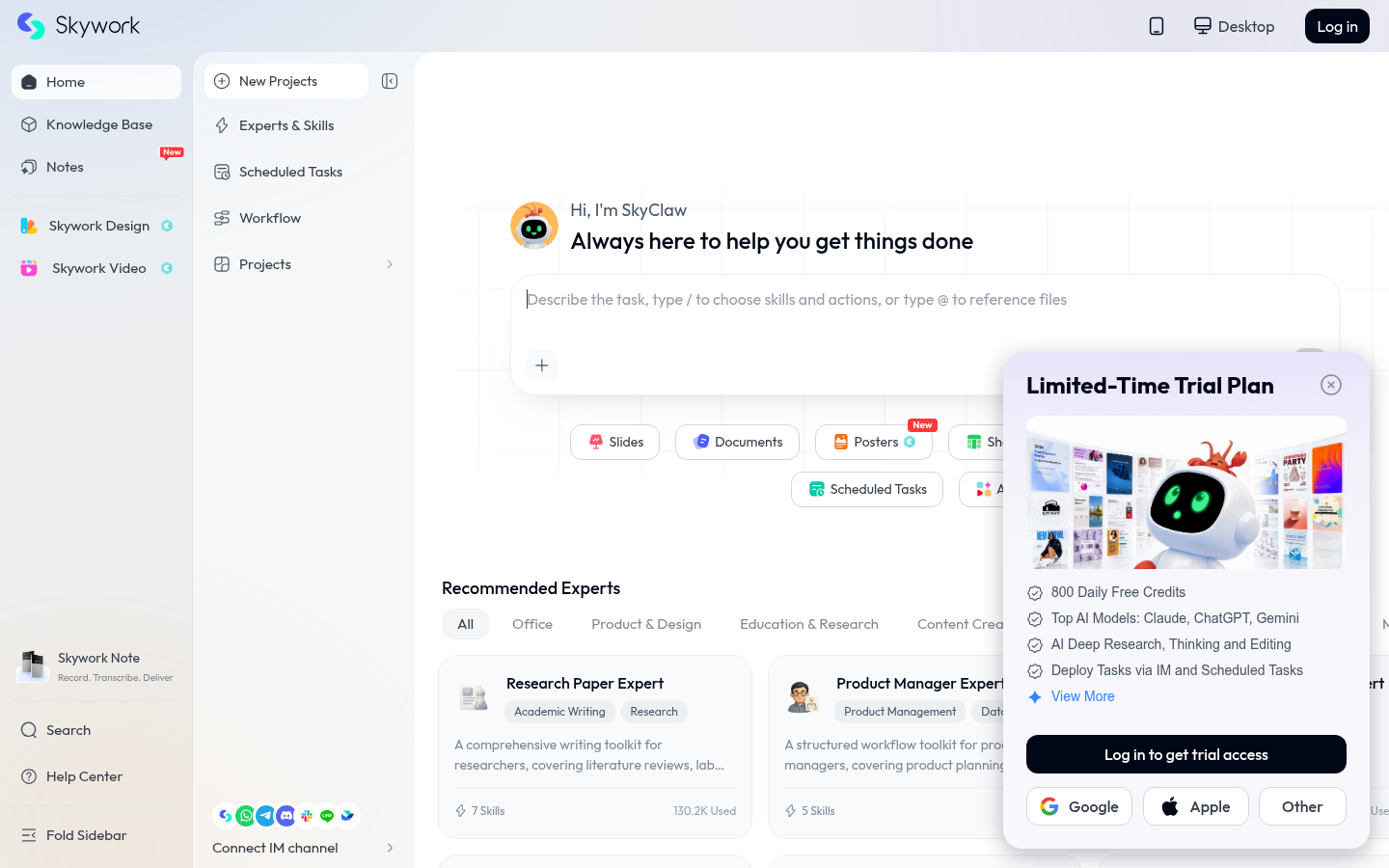
Skywork
- Nano Banana Pro image quality outperforms most standalone image generators
- Deep Research slide mode cites real academic and web sources instead of inventing them
- Layer Splitting brings Photoshop-style layer editing to AI-generated images
- Generalist positioning means no single tool inside it matches a best-in-class specialist
- Website generation is MVP-quality, not a real substitute for Webflow or Framer
The strongest all-round pick among the three alternatives, especially for teams producing visual material regularly.
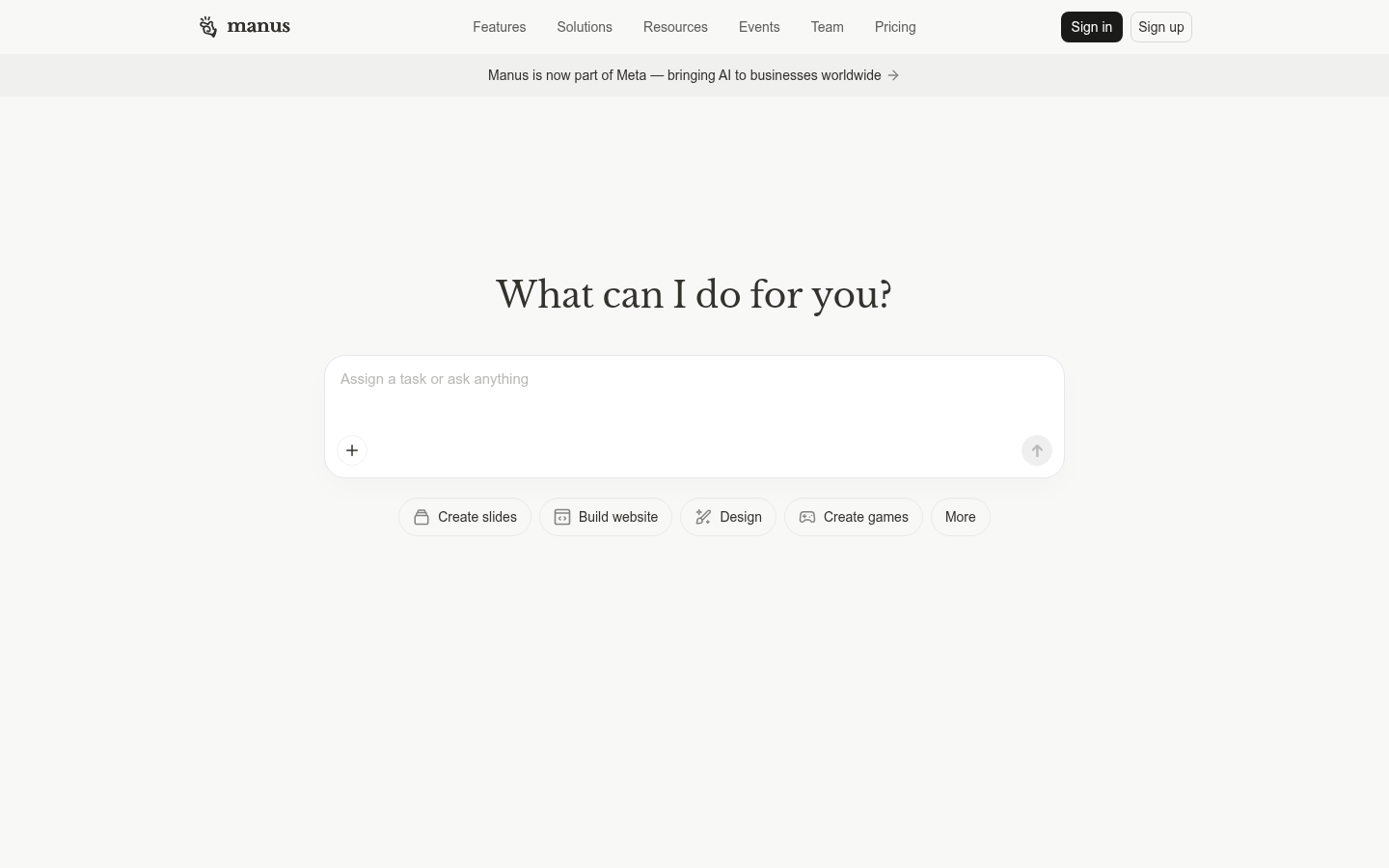
Manus AI
- Genuinely autonomous on well-defined tasks, with no back-and-forth prompting needed
- Wide Research mode fans a task out across parallel sub-agents for large research jobs
- Broad output range spanning code, slide decks, spreadsheets, and written reports
- Credit consumption is unpredictable, with no cost preview shown before a task runs
- G2 reviews average 2.7 out of 5, with frequent billing and refund complaints
- No persistent memory across sessions and no real shared team workspace on individual plans
Capable when a task is narrow and well-defined, but the billing complaints are hard to ignore.
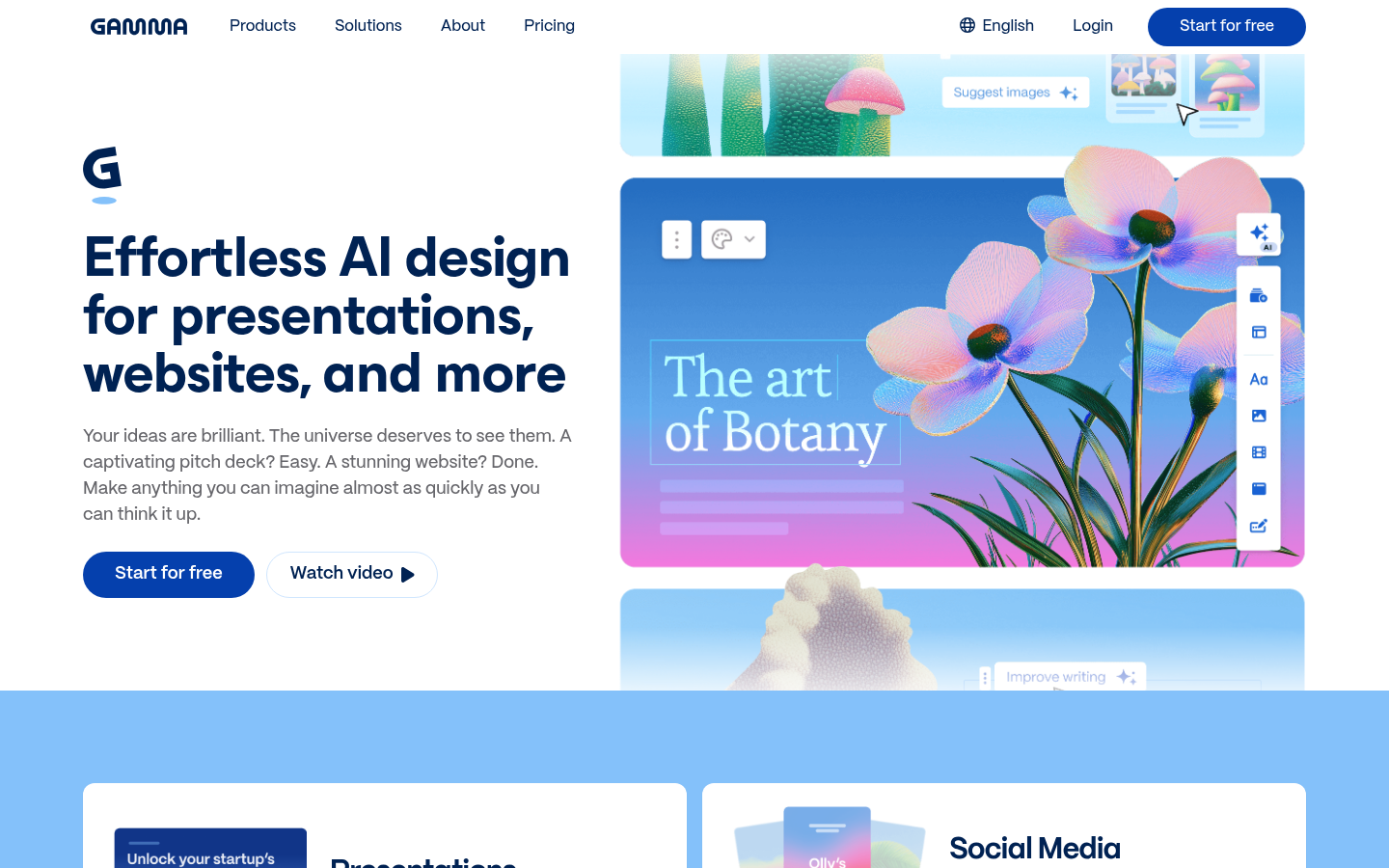
Gamma
- Fastest path from a rough outline to a presentable deck or one-page site
- Card-based editor is easy to learn even without a design background
- SOC 2 Type II compliance, useful when procurement asks about data handling
- Not an autonomous agent: it formats and drafts, it does not browse or execute tasks
- The free tier's one-time credit allowance runs out quickly for regular use
The right tool when the deliverable is a document or deck, not a multi-step task.
Verdict
Skywork is the strongest overall Genspark alternative for teams that produce a steady stream of documents, slides, and visuals, thanks to its image quality and sourced research mode. Manus fits narrower, well-scoped tasks if you can tolerate unpredictable credit costs. Gamma is the fastest option when the only deliverable is a deck or a one-pager, and Genspark itself remains a reasonable single-login default if breadth matters more than depth.
How we tested
This comparison is built from each vendor's public pricing and product pages, official documentation, and aggregated third-party ratings on G2 and Capterra where available, gathered in the first week of August 2026. We did not run a private hands-on trial across all four tools, so treat exact credit costs and feature details as a snapshot, not a lab test. Where a vendor's pricing page requires an account to see full tiers, we flagged that directly in the criteria table instead of guessing at numbers.